Deprecated: Using ${var} in strings is deprecated, use {$var} instead in /home/craftedb/public_html/konig/wp-content/plugins/gravityforms/includes/fields/class-gf-field-list.php on line 167

Deprecated: Using ${var} in strings is deprecated, use {$var} instead in /home/craftedb/public_html/konig/wp-content/plugins/gravityforms/includes/fields/class-gf-field-repeater.php on line 584

Notice: Function _load_textdomain_just_in_time was called incorrectly. Translation loading for the acf domain was triggered too early. This is usually an indicator for some code in the plugin or theme running too early. Translations should be loaded at the init action or later. Please see Debugging in WordPress for more information. (This message was added in version 6.7.0.) in /home/craftedb/public_html/konig/wp-includes/functions.php on line 6170

Notice: Function _load_textdomain_just_in_time was called incorrectly. Translation loading for the rank-math domain was triggered too early. This is usually an indicator for some code in the plugin or theme running too early. Translations should be loaded at the init action or later. Please see Debugging in WordPress for more information. (This message was added in version 6.7.0.) in /home/craftedb/public_html/konig/wp-includes/functions.php on line 6170

Deprecated: Creation of dynamic property RankMath\Admin\Registration::$step is deprecated in /home/craftedb/public_html/konig/wp-content/plugins/seo-by-rank-math/includes/admin/class-registration.php on line 61

Deprecated: Creation of dynamic property RankMath\Admin\Registration::$step_slug is deprecated in /home/craftedb/public_html/konig/wp-content/plugins/seo-by-rank-math/includes/admin/class-registration.php on line 62

Deprecated: Return type of WPGMZA\CustomFeatureFields::getIterator() should either be compatible with IteratorAggregate::getIterator(): Traversable, or the #[\ReturnTypeWillChange] attribute should be used to temporarily suppress the notice in /home/craftedb/public_html/konig/wp-content/plugins/wp-google-maps-pro/includes/custom-fields/class.custom-map-object-fields.php on line 120

Deprecated: Return type of WPGMZA\CustomFeatureFields::jsonSerialize() should either be compatible with JsonSerializable::jsonSerialize(): mixed, or the #[\ReturnTypeWillChange] attribute should be used to temporarily suppress the notice in /home/craftedb/public_html/konig/wp-content/plugins/wp-google-maps-pro/includes/custom-fields/class.custom-map-object-fields.php on line 129

Deprecated: Return type of WPGMZA\CustomFeatureFields::count() should either be compatible with Countable::count(): int, or the #[\ReturnTypeWillChange] attribute should be used to temporarily suppress the notice in /home/craftedb/public_html/konig/wp-content/plugins/wp-google-maps-pro/includes/custom-fields/class.custom-map-object-fields.php on line 111

Deprecated: Return type of WPGMZA\CustomFields::getIterator() should either be compatible with IteratorAggregate::getIterator(): Traversable, or the #[\ReturnTypeWillChange] attribute should be used to temporarily suppress the notice in /home/craftedb/public_html/konig/wp-content/plugins/wp-google-maps-pro/includes/custom-fields/class.custom-fields.php on line 121

Deprecated: Return type of WPGMZA\CustomFields::jsonSerialize() should either be compatible with JsonSerializable::jsonSerialize(): mixed, or the #[\ReturnTypeWillChange] attribute should be used to temporarily suppress the notice in /home/craftedb/public_html/konig/wp-content/plugins/wp-google-maps-pro/includes/custom-fields/class.custom-fields.php on line 130

Deprecated: Return type of WPGMZA\CustomFields::count() should either be compatible with Countable::count(): int, or the #[\ReturnTypeWillChange] attribute should be used to temporarily suppress the notice in /home/craftedb/public_html/konig/wp-content/plugins/wp-google-maps-pro/includes/custom-fields/class.custom-fields.php on line 136

Notice: Function _load_textdomain_just_in_time was called incorrectly. Translation loading for the instagram-feed domain was triggered too early. This is usually an indicator for some code in the plugin or theme running too early. Translations should be loaded at the init action or later. Please see Debugging in WordPress for more information. (This message was added in version 6.7.0.) in /home/craftedb/public_html/konig/wp-includes/functions.php on line 6170

Notice: Function _load_textdomain_just_in_time was called incorrectly. Translation loading for the rank-math domain was triggered too early. This is usually an indicator for some code in the plugin or theme running too early. Translations should be loaded at the init action or later. Please see Debugging in WordPress for more information. (This message was added in version 6.7.0.) in /home/craftedb/public_html/konig/wp-includes/functions.php on line 6170

Deprecated: Creation of dynamic property RankMath\Tools\Update_Score::$screen is deprecated in /home/craftedb/public_html/konig/wp-content/plugins/seo-by-rank-math/includes/modules/database-tools/class-update-score.php on line 46

Deprecated: Creation of dynamic property RankMath\Sitemap\Sitemap::$index is deprecated in /home/craftedb/public_html/konig/wp-content/plugins/seo-by-rank-math/includes/modules/sitemap/class-sitemap.php on line 44

Deprecated: Creation of dynamic property RankMath\Status\Status::$id is deprecated in /home/craftedb/public_html/konig/wp-content/plugins/seo-by-rank-math/includes/traits/class-hooker.php on line 117

Deprecated: Creation of dynamic property RankMath\Status\Status::$directory is deprecated in /home/craftedb/public_html/konig/wp-content/plugins/seo-by-rank-math/includes/traits/class-hooker.php on line 117

Deprecated: Creation of dynamic property RankMath\Status\Status::$page is deprecated in /home/craftedb/public_html/konig/wp-content/plugins/seo-by-rank-math/includes/modules/status/class-status.php on line 56

Deprecated: Creation of dynamic property RankMath\Version_Control::$id is deprecated in /home/craftedb/public_html/konig/wp-content/plugins/seo-by-rank-math/includes/traits/class-hooker.php on line 117

Deprecated: Creation of dynamic property RankMath\Version_Control::$directory is deprecated in /home/craftedb/public_html/konig/wp-content/plugins/seo-by-rank-math/includes/traits/class-hooker.php on line 117

Deprecated: Creation of dynamic property WPGMZA\Database::$version is deprecated in /home/craftedb/public_html/konig/wp-content/plugins/wp-google-maps/includes/class.database.php on line 15

Deprecated: Creation of dynamic property WPGMZA\ProPlugin::$_pro9Compatibility is deprecated in /home/craftedb/public_html/konig/wp-content/plugins/wp-google-maps/includes/class.plugin.php on line 189

Deprecated: Creation of dynamic property WPGMZA\Integration\GutenbergExtended::$blocks is deprecated in /home/craftedb/public_html/konig/wp-content/plugins/wp-google-maps/includes/3rd-party-integration/class.gutenberg-extended.php on line 18

Deprecated: Creation of dynamic property WPGMZA\Integration\ProGutenberg::$extendedBlocks is deprecated in /home/craftedb/public_html/konig/wp-content/plugins/wp-google-maps/includes/3rd-party-integration/class.gutenberg.php on line 38

Deprecated: Creation of dynamic property WPGMZA\InternalEngine::$baseDirOverride is deprecated in /home/craftedb/public_html/konig/wp-content/plugins/wp-google-maps/includes/class.internal-engine.php on line 30

Deprecated: Creation of dynamic property WPGMZA\ProPlugin::$_shortcodes is deprecated in /home/craftedb/public_html/konig/wp-content/plugins/wp-google-maps/includes/class.plugin.php on line 189

Deprecated: Creation of dynamic property WPGMZA\ProPlugin::$acfIntegration is deprecated in /home/craftedb/public_html/konig/wp-content/plugins/wp-google-maps/includes/class.plugin.php on line 189

Deprecated: Creation of dynamic property WPGMZA\ProPlugin::$toolsetWooCommerceIntegration is deprecated in /home/craftedb/public_html/konig/wp-content/plugins/wp-google-maps/includes/class.plugin.php on line 189

Deprecated: Creation of dynamic property WPGMZA\ProDatabase::$version is deprecated in /home/craftedb/public_html/konig/wp-content/plugins/wp-google-maps-pro/includes/class.pro-database.php on line 12

Deprecated: Creation of dynamic property WPGMZA\ProDatabase::$charset_collate is deprecated in /home/craftedb/public_html/konig/wp-content/plugins/wp-google-maps-pro/includes/class.pro-database.php on line 13

Deprecated: Creation of dynamic property WPGMZA\ProPlugin::$proDatabase is deprecated in /home/craftedb/public_html/konig/wp-content/plugins/wp-google-maps/includes/class.plugin.php on line 189

Deprecated: Creation of dynamic property WPGMZA\AdminNotices::$dynamicTitles is deprecated in /home/craftedb/public_html/konig/wp-content/plugins/wp-google-maps/includes/class.admin-notices.php on line 22

Deprecated: Creation of dynamic property WPGMZA\AdminNotices::$dynamicMessages is deprecated in /home/craftedb/public_html/konig/wp-content/plugins/wp-google-maps/includes/class.admin-notices.php on line 31

Deprecated: Creation of dynamic property WPGMZA\ProPlugin::$_adminNotices is deprecated in /home/craftedb/public_html/konig/wp-content/plugins/wp-google-maps/includes/class.plugin.php on line 189

Deprecated: Creation of dynamic property WPGMZA\ProPlugin::$cloudAPI is deprecated in /home/craftedb/public_html/konig/wp-content/plugins/wp-google-maps/includes/class.plugin.php on line 189

Deprecated: Creation of dynamic property RankMath\Replace_Variables\Manager::$post is deprecated in /home/craftedb/public_html/konig/wp-content/plugins/seo-by-rank-math/includes/replace-variables/class-base.php on line 157

Deprecated: Creation of dynamic property RankMath\Frontend\Link_Attributes::$add_noopener is deprecated in /home/craftedb/public_html/konig/wp-content/plugins/seo-by-rank-math/includes/frontend/class-link-attributes.php on line 42

Deprecated: Creation of dynamic property RankMath\Frontend\Link_Attributes::$nofollow_link is deprecated in /home/craftedb/public_html/konig/wp-content/plugins/seo-by-rank-math/includes/frontend/class-link-attributes.php on line 43

Deprecated: Creation of dynamic property RankMath\Frontend\Link_Attributes::$nofollow_image is deprecated in /home/craftedb/public_html/konig/wp-content/plugins/seo-by-rank-math/includes/frontend/class-link-attributes.php on line 44

Deprecated: Creation of dynamic property RankMath\Frontend\Link_Attributes::$new_window_link is deprecated in /home/craftedb/public_html/konig/wp-content/plugins/seo-by-rank-math/includes/frontend/class-link-attributes.php on line 45

Deprecated: Creation of dynamic property RankMath\Frontend\Link_Attributes::$remove_class is deprecated in /home/craftedb/public_html/konig/wp-content/plugins/seo-by-rank-math/includes/frontend/class-link-attributes.php on line 46

Deprecated: Creation of dynamic property RankMath\Frontend\Link_Attributes::$is_dirty is deprecated in /home/craftedb/public_html/konig/wp-content/plugins/seo-by-rank-math/includes/frontend/class-link-attributes.php on line 47

Deprecated: Creation of dynamic property RankMath\Frontend\Link_Attributes::$add_attributes is deprecated in /home/craftedb/public_html/konig/wp-content/plugins/seo-by-rank-math/includes/frontend/class-link-attributes.php on line 50

Warning: Cannot modify header information - headers already sent by (output started at /home/craftedb/public_html/konig/wp-content/plugins/gravityforms/includes/fields/class-gf-field-list.php:167) in /home/craftedb/public_html/konig/wp-includes/feed-rss2.php on line 8
FOE Creative Theme https://konig.craftedbyfoe.com Mon, 19 Dec 2022 23:15:23 +0000 en-CA hourly 1 https://wordpress.org/?v=7.0.1 https://konig.craftedbyfoe.com/wp-content/uploads/2022/11/cropped-fav-base-32x32.png FOE Creative Theme https://konig.craftedbyfoe.com 32 32 Install: Leinenkugel Brewing Company https://konig.craftedbyfoe.com/2022/12/install-leinenkugel-brewing-company/ Mon, 19 Dec 2022 23:15:21 +0000 https://konig.craftedbyfoe.com/?p=973
Install: Leinenkugel Brewing Company

Install: Leinenkugel Brewing Company

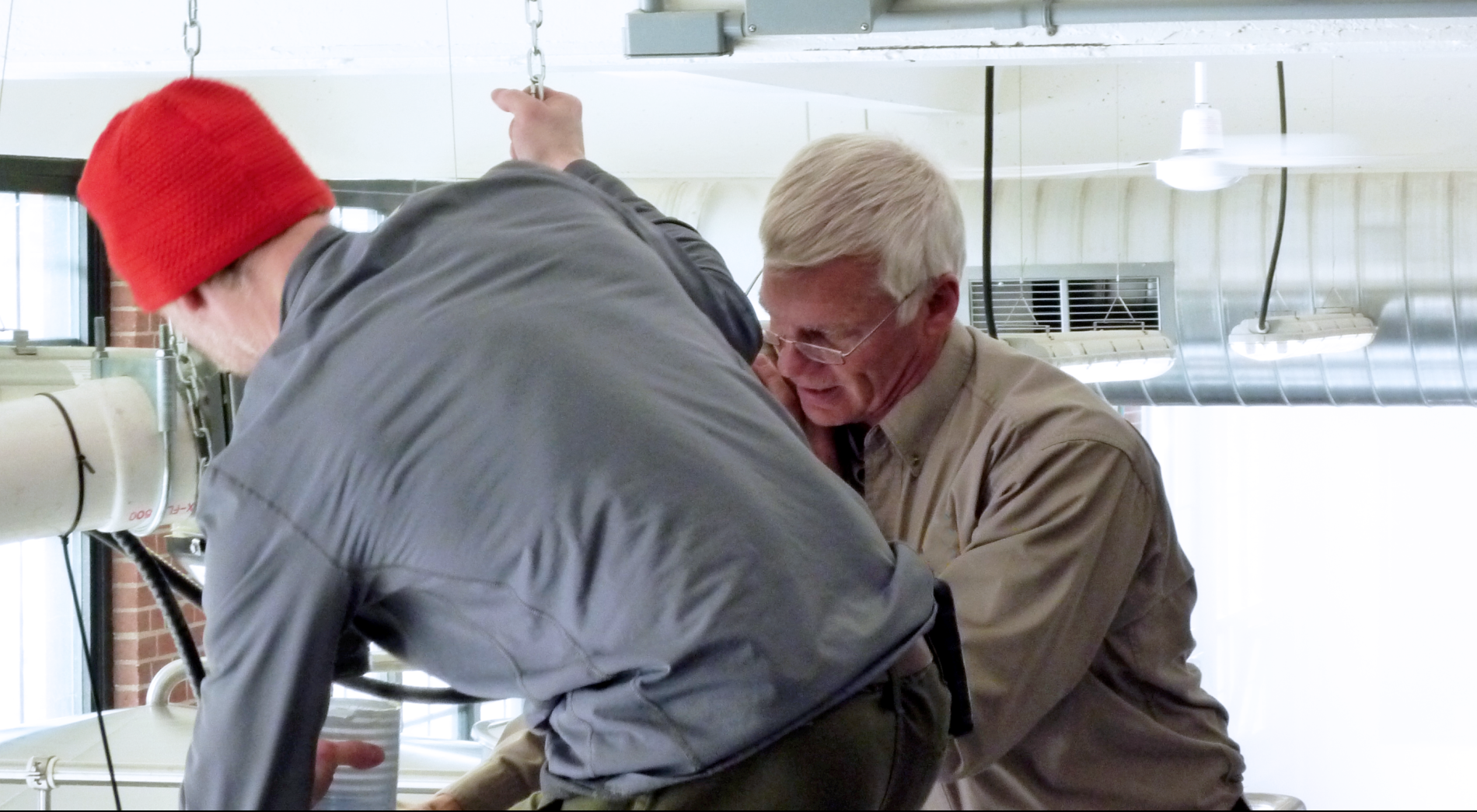
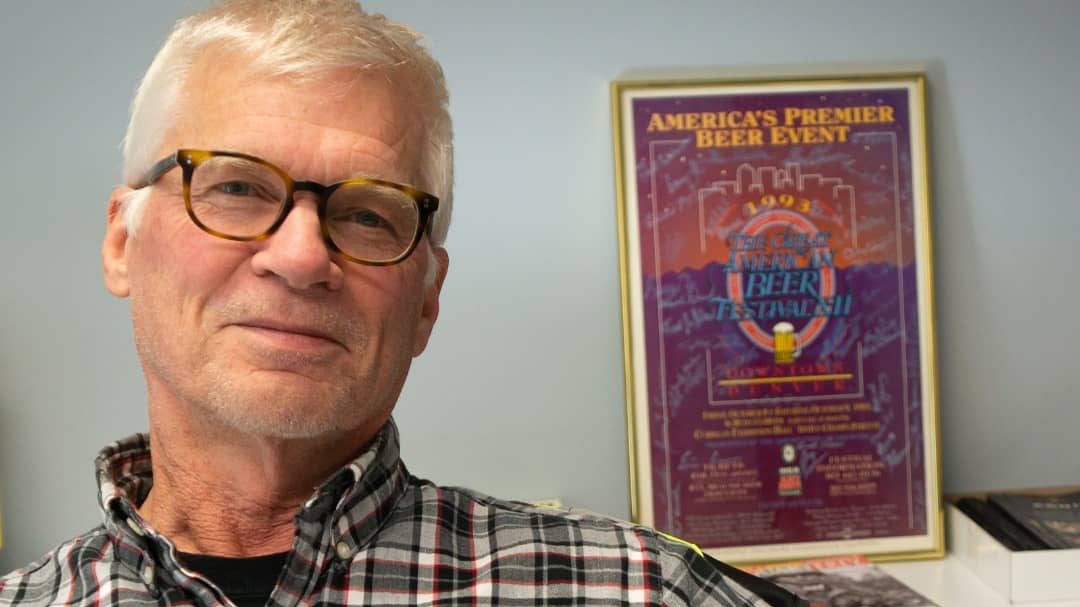
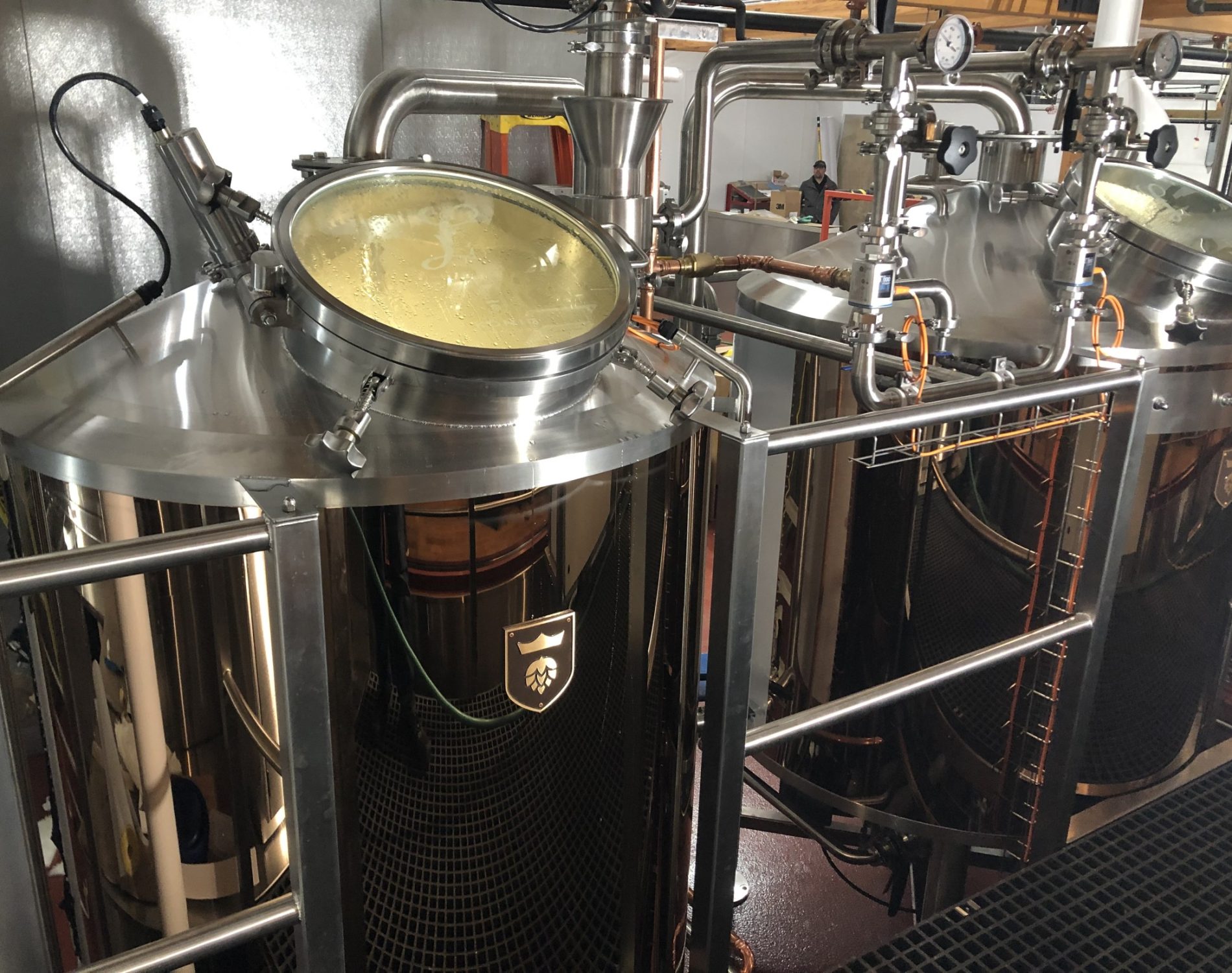
We were in Chippewa Falls, Wisconsin, installing a 7bbl copper-clad show stopper for Leinenkugel Brewery this month! König Master Brewer Brad McQuhae and our project partner Foundation Mechanical were on site helping to install the new system and commission it with the Leinenkugel brew team. We had a successful first brew and are excited to see what kinds of creativity the brewers get up to.

System Features:

  • 7bbl 3 vessel
  • ten cellar tanks
  • KÖNIG YPS 150
  • Copper cladding

Dubbed “Tiny Leinie,” this pilot brewery will be located inside the legendary Leinie Lodge. This brewhouse will make new test brews and bring back fan favourites from the past.

Follow Leinie Lodge on their socials to see what Master Brewer John is brewing up.

]]>
What to Consider When Installing & Starting Up Your New Brewhouse (Part 2) https://konig.craftedbyfoe.com/2022/12/what-to-consider-when-installing-starting-up-your-new-brewhouse-part-2/ Mon, 19 Dec 2022 23:09:48 +0000 https://konig.craftedbyfoe.com/?p=967
What to Consider When Installing & Starting Up Your New Brewhouse (Part 2)

What to Consider When Installing & Starting Up Your New Brewhouse (Part 2)

Passivation and First Brew

Passivating always seems to be a bit of voodoo art to most, and if you have done any research, you are likely to agree. I have read many different articles on how to “properly” passivate stainless steel using many different acidic compounds. Most methods call for a strong acidic solution (like nitric acid) circulated for some time at a particular temperature. I like to reference ASTM A380/A380M-17, which defines a standard practice for stainless steel cleaning, descaling, and passivation that the U.S. Department of Defense adopted. For what we need, the basics are rinse, clean (alkaline detergent), rinse, acid passivate, and rinse.

However, something that never seems to come up is the potential damage of brewery components with a strong hot acid (such as nitric). I have witnessed damage to manway gaskets, pump seals, other seals, corroded pump motor shafts, etc. So, if you can try to isolate items that may be damaged during this process, you will save yourself plenty of grief.

[As a side note, when running these procedures hot be aware of the potential of collapsing a vessel if it is not adequately vented (i.e., Hot Liquor or Cold Liquor tanks). A small amount of cold rinse water can lead to a catastrophic event.]

Once the system is passivated, I will do more water brews to ensure everything works and no damage was caused during cleaning and passivation procedures. Plus, this also gives the system a good rinse. This is when I check and verify flow rates of flow meters and temperature devices (either digital or analog). I usually use a known-good thermometer (certified) to verify temperatures. Any device with a function should be tested during the water brew (not while brewing the first actual brew).

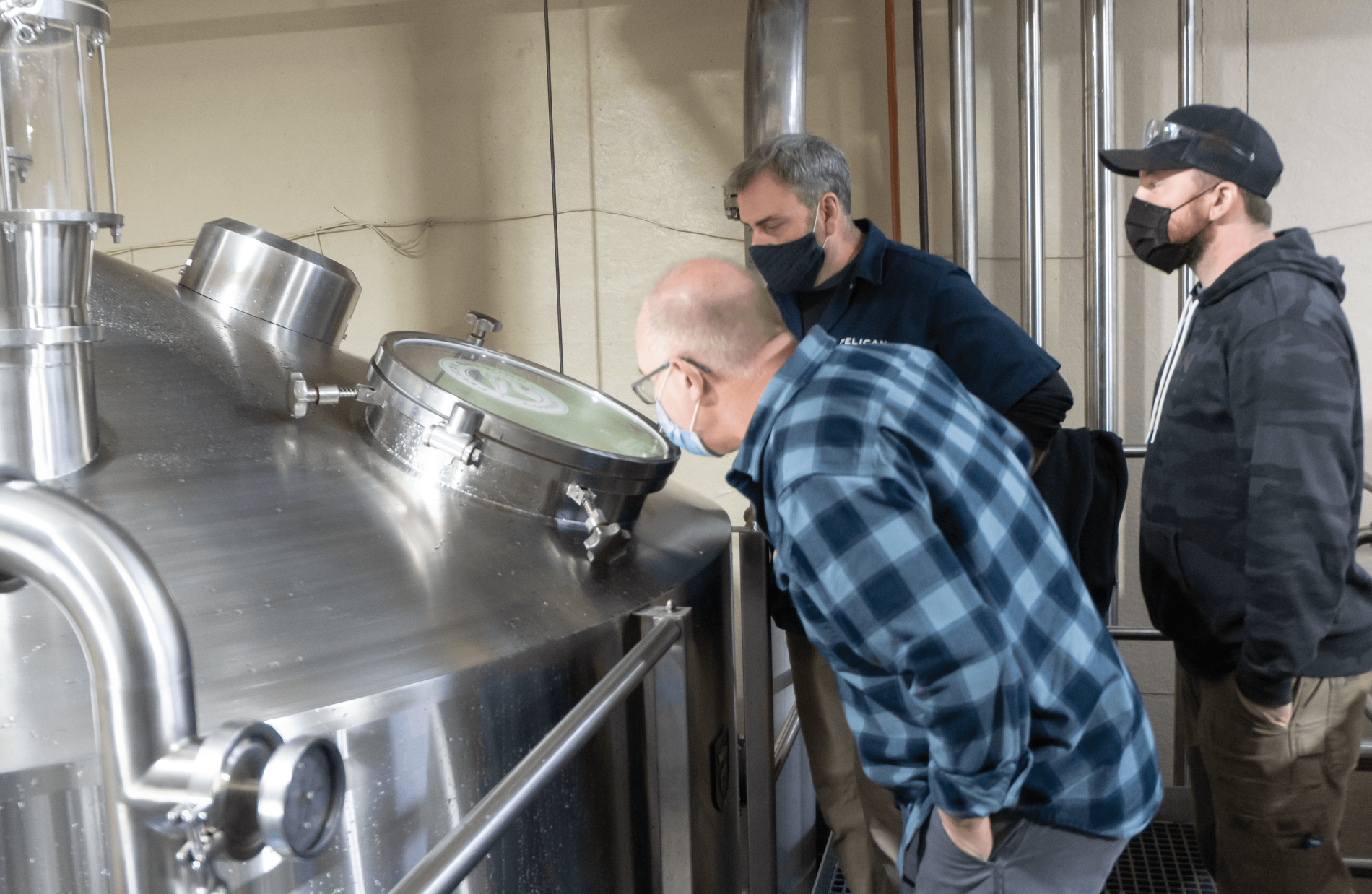
Concurrent to running the cleaning and passivation of the brewhouse vessels, I will work on the malt handling system. One of the obvious things is making sure all motors run in the proper direction. Augers, conveyors, and the malt mill must be checked for appropriate rotation or direction. Once it is determined all the malt handling components work, I will run a couple of bags of sacrificial malt (i.e., malt that I am willing to dump) through the system. This helps clean out any debris, polish up auger flighting, and remove thin oil coatings. The mill can be set up for flow rate and gap to get a reasonable crush for the first brew. If screens are available, I will use these to dial in the mill roller gap width.

Once water brews are trouble-free, I will set up for the first brew. That means filling both hot and cold liquor tanks, setting their temperatures, and monitoring to ensure they are working as expected. The malt recipe will run through the malt handling system and into a grist hopper (if included), allowing the checking of motor performance (i.e., heat and amperage draw) and balancing flows between conveyors and the malt mill.

On mashing-in, water volume is usually measured with a flow meter, and liquor temperature may be manually monitored and adjusted or by automation, depending on the system. If the mash vessel has heating jackets and an agitator, both will be checked for proper operation. Mash agitator drive will be run up to 100%, and the mixing performance observed. Keep in mind the lower the liquor to grist ratio, the poorer the mixing performance (i.e., less than 2.8:1). The times to hit the various setpoints will be noted during heating steps and heat rates calculated.

Before transferring the mash, foundation water is added to the lauter tun. Temperature stability noted. Usually the amount will be just to the top of the false bottom screens. If there is a flow meter on the hot liquor line, this volume is noted and used for subsequent brews.

If the mashing vessel is dedicated for this purpose, then at the end of the mashing program, a transfer over to a lauter tun is next. Both speeds of transfer and how well the mash vessel drains (vortexing? complete emptying?) are noted. Always listening for any unusual noises and constantly checking for leaks. I like to see this transfer occur within 10 minutes for a “normal” brew.

During this time, a handheld ammeter is used to check the amp draw of the motors while under load. An example is during mash mixing (above) when the variable frequency drive is sped up to 100% the motor is likely to draw close to the motor tag FLA (full load amperage). A quick check of the motor temperature (by hand) will tell you if the motor is working hard. If a motor heats up significantly within a few minutes, you may have a problem; an ammeter check will verify this.

After the mash has settled vorlauf or recirculation of the wort back into lauter tun is started. After a predetermined amount of time (usually 10 to 20 min), the wort flow will be switched to the brew kettle. During vorlauf and run-off, I will carefully monitor the differential pressure either visually (if no pressure transmitter) or with the installed devices (pressure transmitters).

If the system has variable height rakes, then during lautering, I will run these to their limits while at raking speed. Even though these would have been tested many times prior I am cautious the first time with a grain bed.

Sparge temperature stability, flow rate, and coverage pattern are monitored, and any abnormalities are noted for further review.

At the end of lautering, I will take a sample of the spent grains and do a starch test (iodine) for residual unconverted starch. This will help me dial in the malt mill. If any starch is detected, that tells me I am losing extract and need to adjust my mill settings (gap width, feed rate, etc). As most brewers know there is a fine line between too tight and too loose malt mill roller gap. So some caution must be exercised when making these adjustments.

With steam-fired systems, I will turn on the heat in the brew kettle as soon as the bottom jacket is covered. As the kettle fills, I will note the temperature and volume and try to maintain a wort temperature of 90℃ to 95℃ (194℉ to 203℉). Once the kettle full mark is made, maximum heat is applied and the time to get to a full boil is noted.

Over boil sensor: During previous water brews, the overboil sensor (if installed) is tested by manually grounding the probe to the vessel dome. This is not the same as wort foam during boiling. The device’s sensitivity may have to be adjusted to react more accurately to the conductivity to wort foam during boiling. So, I carefully allow boiling wort to foam up to the overboil sensor to make sure it reacts correctly. If it does not respond quickly enough, I will increase the sensitivity until I get the response I want.

Brew kettle evaporation rate is calculated based on starting volume, end volume, and boil time. The most accurate way is by using a dipstick. An external sight glass can give erroneous readings, so I like to verify with a manual method.

During wort boiling, the lauter tun will be emptied. If there is a spent grains removal system in place, this will be tested. Assuming the lauter tun has adjustable rake height, I will usually start with the rakes and plows in the full-up position. With the spent grains manway open, I will set the plow-out speed at half and slowly lower the cutting rakes (plows still up) into the grain bed, all the while listening for any unusual sounds and watching the rotation. Once the rakes reach the bottom limits, I will bring them to the full-up position and then drop the plows and repeat the process, but I will lower according to the amount of spent grain being removed.

On completion of boiling, the wort is either whirlpooled in situ or transferred to a whirlpool vessel. My belief is this should be as brief as possible. If whirlpooling in situ, run the whirlpool pump only long enough to get the wort moving (~ 5 min). Once you reach the terminal rotational speed, shut the pump down and allow the wort to settle. Do not keep running the pump for another 15 min – all the pump does is homogenize the protein flocks you created while boiling. Settling occurs after the pump is turned off.

If there is a separate whirlpool, the pump should be sized for a 10 to 15 min transfer. My preference is a high volume, low speed (RPM) pump. Since most pumps these days are run with a variable frequency drive, the pump speed is usually not an issue. Pumping/transferring problems will arise if the pump is sized incorrectly or the piping is of a poor design.

Once the trub has settled, the wort can be cooled and transferred to an awaiting fermentation vessel. I will usually start the process slowly. Wort is allowed to gravity feed the pump and then the heat-exchanger (this is system-dependent). Coolant flow is turned on and verified, and then the wort pump. Wort temperature at the discharge side of the heat exchanger is closely monitored and adjusted as required. Temperature can be controlled by varying the coolant flow rate or varying the wort flow rate (pick one). Usually, the coolant flow rate becomes fixed, and the wort pump speed is adjusted to trim the temperature. Heat exchangers are engineered with somewhat fixed parameters. However, there is quite a range they can operate within.

Almost without exception, air or oxygen is injected, post-heat exchanger. The aeration device always has an inline sight glass which must be checked to ensure the device is operating correctly. Oxygen (or air) flow should be ramped up and down to ensure the flow gauge is reading (and the check valve is not installed backward).

Once knock-out is complete, any deficiencies noted should be addressed as soon as reasonably possible.

This article is not a comprehensive manual about brewery start-ups but an overview of important and often overlooked considerations. There are numerous configurations and permutations to take into account, but the main takeaway is to check everything and assume nothing.
]]>
What to Consider When Installing & Starting up Your New Brewhouse (Part 1) https://konig.craftedbyfoe.com/2022/12/what-to-consider-when-installing-starting-up-your-new-brewhouse-part-1/ Mon, 19 Dec 2022 23:06:50 +0000 https://konig.craftedbyfoe.com/?p=962
What to Consider When Installing & Starting up Your New Brewhouse (Part 1)

What to Consider When Installing & Starting up Your New Brewhouse (Part 1)

A high-level overview of KONIG’s Brad McQuhae brewhouse start up process

The process of commissioning a brewery (either new or used) varies widely. The type of system and complexity determines what will be checked and what procedures are followed. For example, procedures for a simple two-vessel manual brewhouse will be very different than a four-vessel automated system. However, one thing that is common to all is the cleaning and passivation procedures before a brewing system is put into service.

Regardless of whether a system has been checked at the factory before shipping (i.e., the FAT or Factory Acceptance Test), everything must be tested again once it is onsite and installed. The FAT tests what can be tested (vessel, electrical/electronics, piping system, pumps, valves, some devices, etc.). It determines if any significant changes need to be made before disassembly and shipping. It is easier and cheaper to fix or make changes in the factory than in the field.

Typically, the brewery equipment supplier will provide a layout of how the equipment should be positioned onsite. What is often lacking is the order in which the vessels should be placed. Sometimes it is pretty logical, but sometimes not. An example is a four-vessel brewhouse positioned linearly versus that with the vessels placed in a square. I would place the lauter tun first in the linear brewhouse configuration (regardless of where in the line it is located), but in the square configuration, I would place the vessels in the back of the square first (if there is a back). The reason for picking the lauter tun (LT) is because it is usually the heaviest and therefore the most difficult to position. Once it is placed, the other vessels can be positioned using the LT as the anchor. In the square configuration, this may not be possible. In some instances, say where there is a hanging grist hopper, the mash kettle (or, depending on the system, mash tun) may be the anchor vessel. In most cases, the structural challenges of hanging a grist hopper determine the location of the vessels below it. In other words, the grist hopper is not moveable, so we’ll have to adjust the vessels to suit its position.

Once all the equipment is in position, they must be leveled (and anchored – but usually after all the piping connections are made – just in case). Leveling equipment may sound obvious; however, I have seen many systems where the owner is anxious to see their equipment fully assembled and unfortunately overlooked this step. If there is a platform, it will be installed and leveled as well. If the system was pre-piped, pre-placement of the pumps and reassembly of the piping will go together easier with correctly placed and leveled equipment.

Once the system is fully assembled, and all the electrical is connected, it is time to start testing. I usually get the local electrician to power up the panel with the internal breakers opened and check for faults as each breaker is closed. If any trip immediately, there is likely a fault somewhere. I say that, but I have seen breakers trip due to the current in-rush (from transformers, or VFDs) from the initial start-up, which is not so much a fault in the electrical system.

The next step with the electrical is to check motor rotation. Do not assume anything is going to rotate in the proper direction.

Again, this should be done alongside the local electrician. He may not know which way something is supposed to rotate but he will know how to correct it safely.

I have skipped the connecting of water, steam/condensate, malt handling, and glycol systems for brevity purposes. This article is intended to summarize starting up a typical brewing system, not so much as a comprehensive set of instructions for all types of breweries.

Once everything is deemed to be operational electrically, we can prepare for moving water around. The first thing I do is visually inspect inside the vessels for foreign objects (such as nuts, bolts, washers, rags, etc.). The next thing is to disconnect the lines going to the suction side of the pumps (I know, you just finished connecting them!). Then open all drain valves. Now you can start hosing out the loose debris that has accumulated inside the vessel over the previous months. Pay particular attention to the lines going to the pumps. I have run a lot of debris through pumps during start-up, so learn from me.

After thoroughly rinsing and inspecting, we can button up the disconnected lines and close all valves. I like to start from a known position; that is why I ask to close all valves; it helps reduce the number of surprises. Now, we can simulate a brew, or as some say, do a water brew. I would typically do this first one with cold water in case we need to make some changes on the fly – I hate doing that when everything is hot. If this test goes well get a little more serious and simulate with hot water if available.

During this phase, I check to make sure the pumps are running within their designed current load rating. I will cycle them up to the point of cavitation (if possible) and then back down to their lowest rotational speed. All the time listening for any unusual noises and vibrations.

Before we get to cleaning, we will test the vessel heating. With direct-fired systems (both forced draft burner and electric) it is straightforward. Steam, however, requires a bit more involvement from other professionals. Usually, the company (or person) who installs the steam boiler/system will either fire it or will commission a local expert to fire it up and dial it in as required. When firing up the steam system for the first time, I like to open the condensate at the “Y” strainers and let the steam/condensate blow out any debris that may have accumulated during installation. I will usually run this for 10 to 15 minutes. It can be noisy, hot, and humid but at least you likely won’t have to open up a faulty (read leaking) steam trap.

In part two of how to start up your new brewhouse, I will discuss passivation and conducting your first brew.

]]>
CBC 2021: KÖNIG Makes Their Debut https://konig.craftedbyfoe.com/2022/12/cbc-2021-konig-makes-their-debut/ Mon, 19 Dec 2022 23:03:11 +0000 https://konig.craftedbyfoe.com/?p=954
CBC 2021: KÖNIG Makes Their Debut

CBC 2021: KÖNIG Makes Their Debut

We finally made it to the Craft Brewers Conference!

Introducing KÖNIG to the industry via in-person events has been a long time coming for the team. We went live as a company in April 2019, and exhibiting at the Craft Brewers Conference was important to reintroducing the team and debuting KÖNIG to market. It was too late for us to display at the 2019 CBC; however, we registered and secured our booth at the 2020 CBC as soon as we could. Unfortunately, the show would be canceled with the onset of the COVID-19 pandemic; we would have to wait a little longer to get to CBC.

Finally, in September of 2021, we made it! CBC Denver 2021. Not as busy as we were used to; however, it was great to be there and see the KÖNIG sign hanging from the rafters. Best of all, we got to meet new brewers and brewery owners, reconnect with some familiar faces and connect with others in the brewing industry.

Our display featured imagery and video of the 100bbl system we built for Pelican Brewing and a rectification column.

To sum it up, it was great to be back at the show, and we look forward to CBC 2022 in Minneapolis!

]]>
Podcast: Beer Sessions Radio Episode 582 https://konig.craftedbyfoe.com/2022/12/podcast-beer-sessions-radio-episode-582/ Mon, 19 Dec 2022 22:55:18 +0000 https://konig.craftedbyfoe.com/?p=951
Podcast: Beer Sessions Radio Episode 582

Podcast: Beer Sessions Radio Episode 582

Building a Brewery: Snakes, Sub-Zero Temps, and Sushi

Jimmy from Beer Sessions Radio brings in Brad McQuhae and Balbir Sidhu from Konig Brewing Systems in Abbotsford, BC, and John Legnard from Blue Moon Brewing at the Molson Brewery in Montreal, Quebec, join Jimmy to discuss some stories from their achieves, including dealing with snakes and rats in breweries, working just below the arctic circle, eating out in Japan, and mastering a brewing system in a 100-year-old baseball stadium. Alongside Brad, Balbir tells us how he started as an engineer and about a particular project he worked on in a hockey arena early in his career. The gang has been in the industry for decades, taking us back in time for a glimpse of what early craft brewing looked like in the 90s. John also reveals the secret weapons Brad and Balbir bring to the table, as well as the highly detailed checklist you need to map out before building a brewery.

]]>
Podcast: Beer Sessions Radio Episode 565 https://konig.craftedbyfoe.com/2022/12/podcast-beer-sessions-radio-episode-565/ Mon, 19 Dec 2022 22:50:23 +0000 https://konig.craftedbyfoe.com/?p=942
Podcast: Beer Sessions Radio Episode 565

Podcast: Beer Sessions Radio Episode 565

B.C. Craft Beer and Malt with Canadian Legends

Brad along with friends; Rob Liedl from Applied Brewing and Malting Solutions in Vernon, BC; and Joe Wiebe, author of Craft Beer Revolution: The Insider’s Guide to BC Breweries, co-founder of Victoria Beer Week, and director of content for BC Ale Trail. Speak to Jimmy of Beer Sessions Radio. The group starts with a brief history of Canada’s craft beer scene during the 80s and 90s. Rob takes us down memory lane with the crazy story of how he was introduced to Brad, who helped land Rob an interview and eventually a job running a malthouse in BC. In the early 90s, there was hardly any demand for malt, but Rob explains that malt eventually grew into a push-pull relationship as more brewers entered the scene. Brad and Joe agreed that everything began to accelerate in the late 90s.

In the manufacturing world, Brad has witnessed first-hand the innovations and trends overtaking the craft brewing scene, such as a steep rise in pricing for equipment, and the monumental move from direct fire to steam. Even in the malting world, Rob praises the extensive knowledge of oxygen in relation to barley that just didn’t exist 20-30 years ago. For Joe, all the innovation and success became obvious when he found himself struggling to keep up with all the new craft breweries open. Unable to update his book fast enough, he pivoted to creating an online BC Ale Trail to guide visitors and locals through the scene, and feels confident that Covid-19 has helped breweries strengthen their business models. Rob and Brad are also hopeful for 2021 and the future, with Brad anticipating a very good summer and Rob envisioning another wave of the roaring 20s.

]]>
Pelican Brewing: 100BBL Brew House https://konig.craftedbyfoe.com/2022/12/pelican-brewing-100bbl-brew-house/ Mon, 19 Dec 2022 22:40:39 +0000 https://konig.craftedbyfoe.com/?p=925
Pelican Brewing: 100BBL Brew House

Pelican Brewing: 100BBL Brew House

Highlighting KÖNIG’s innovative Approach to Brewing

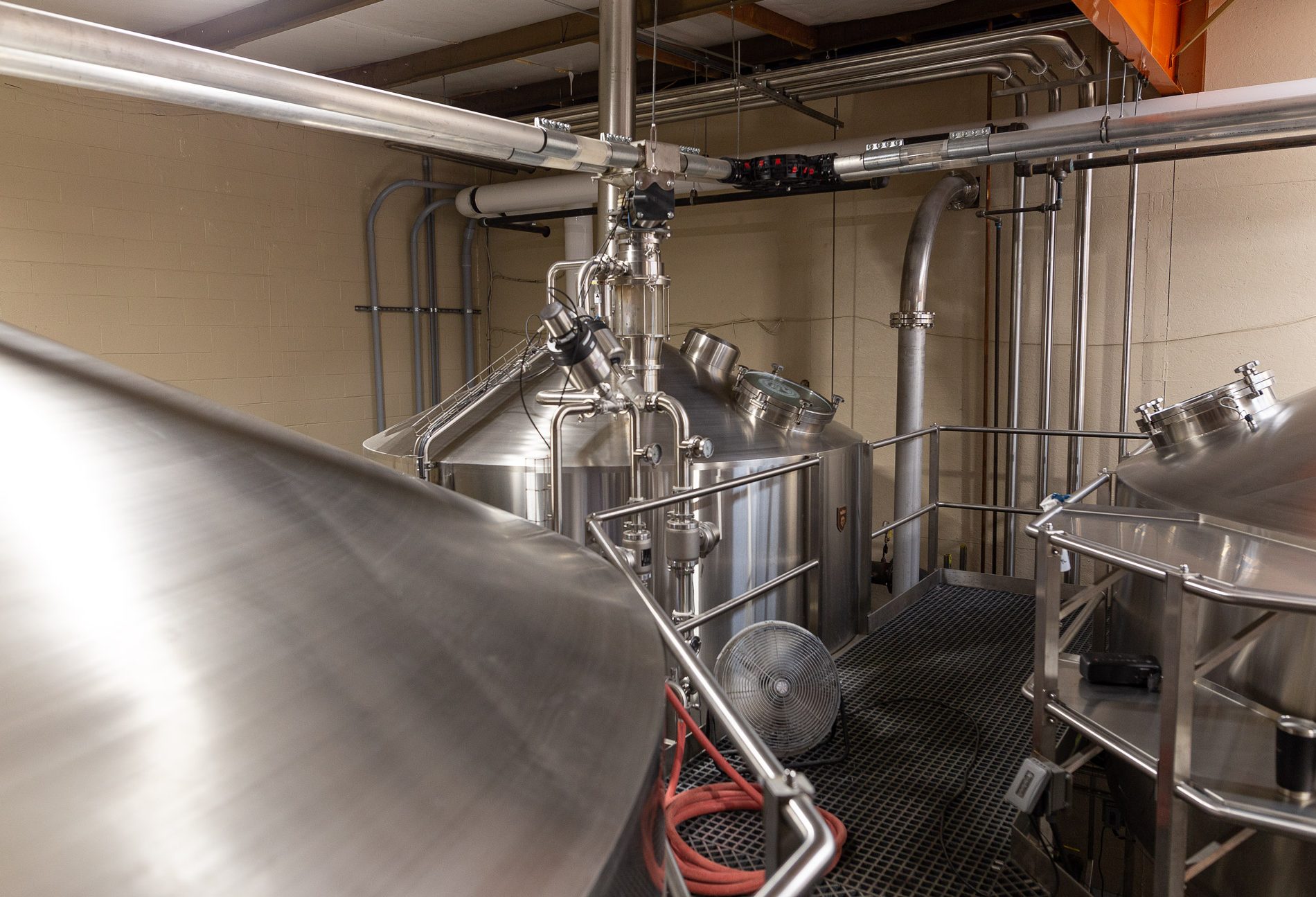
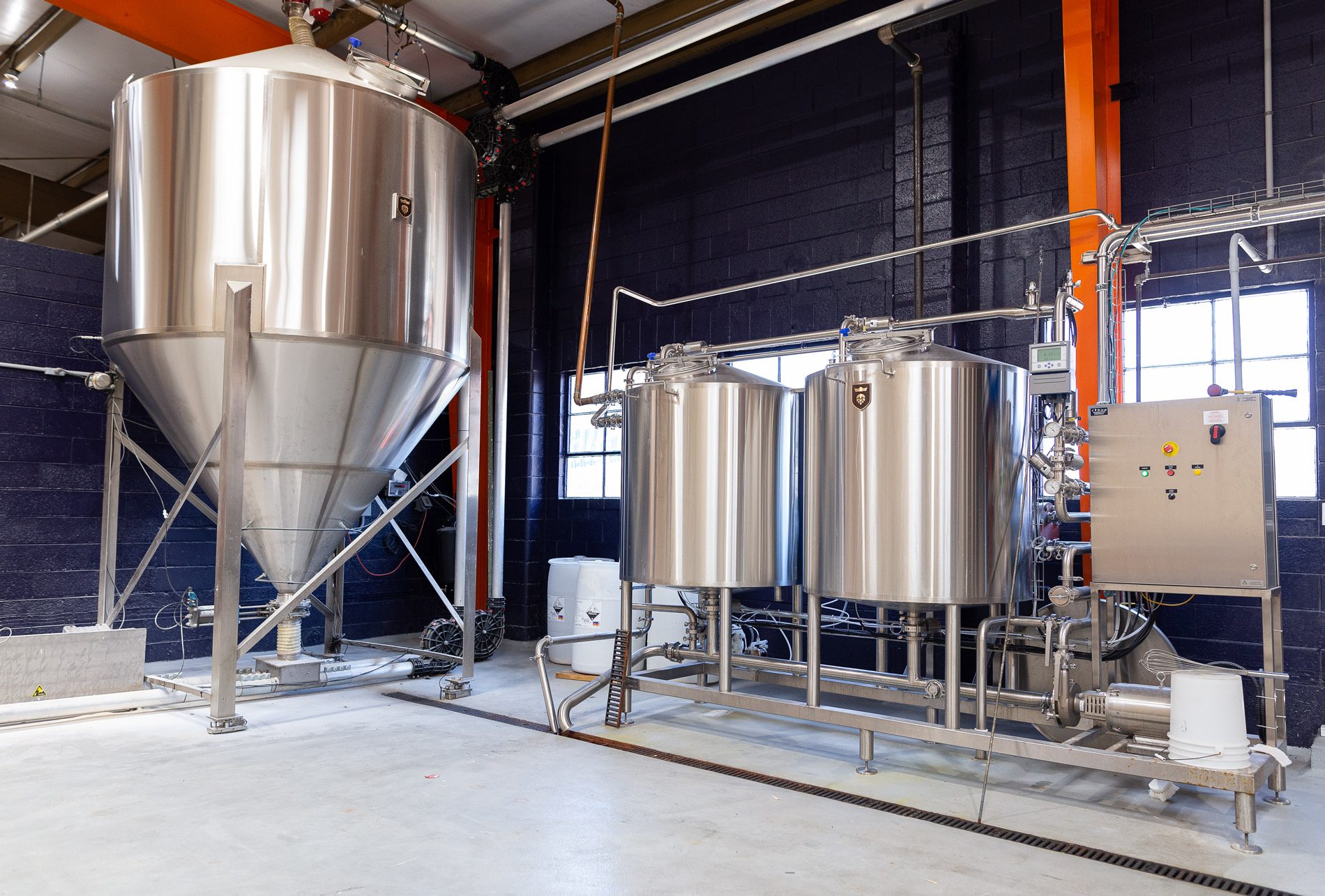
State-of-the-art 100bbl fully automated production brewery in Tillamook OR was built with KÖNIG Systems innovation and designed to improve end-product consistency, energy savings, reduce waste, and enhance the overall efficiency of the brewing process.

System features:

  • Patented wort rectification technology – quickly reduces DMS allowing for reduced boil time and energy consumption.
  • External boiler – efficient, fast heat-up, and batch size flexibility.
  • Insulated vessel tops for safety and reduced brewhouse ambient heat gain.
  • Process piping designed for fast transfers and in-process CIP.
  • Wort chiller designed for 20-minute knock out.
  • Capable of producing 120 bbls of 18 plato cold wort.
  • Custom layout to fit tight space restrictions.
  • Efficient and quiet while operating.

“The number of companies that do this work (at this size) is small. KÖNIG was the clear choice.”

– Martin Bills Director of Brewing Operations


]]>